
Looking at human remains. Exploring sector needs for policy frameworks and ethical guidance on the display of human remains in museums in Flanders and Brussels
Eva Desmet
Master Erfgoedstudies
2025 — 2026
onderzoek
promotoren
Suzie Thomas
Anke Hellebuyck
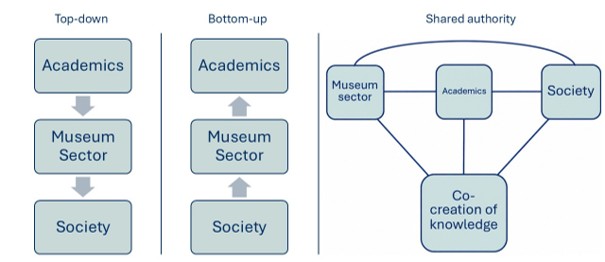
Ethical guidelines will have a better foundation if they are co-created between the museum sector, academics, and society. © Eva Desmet
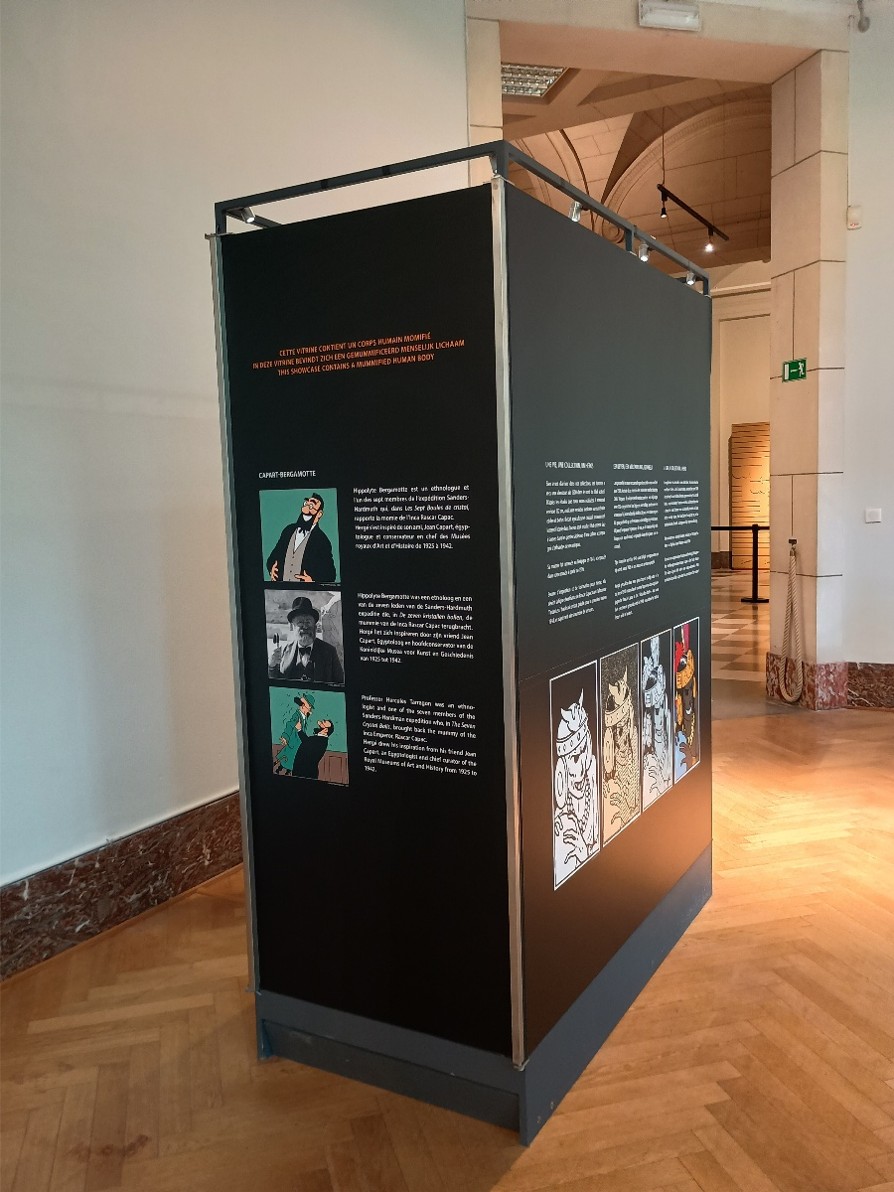
This display case in the Royal Museum of Art and History, Brussels, is only transparent on one side, so the human remains are not immediately visible and the visitor can choose to view them. © Anke Hellebuyck.
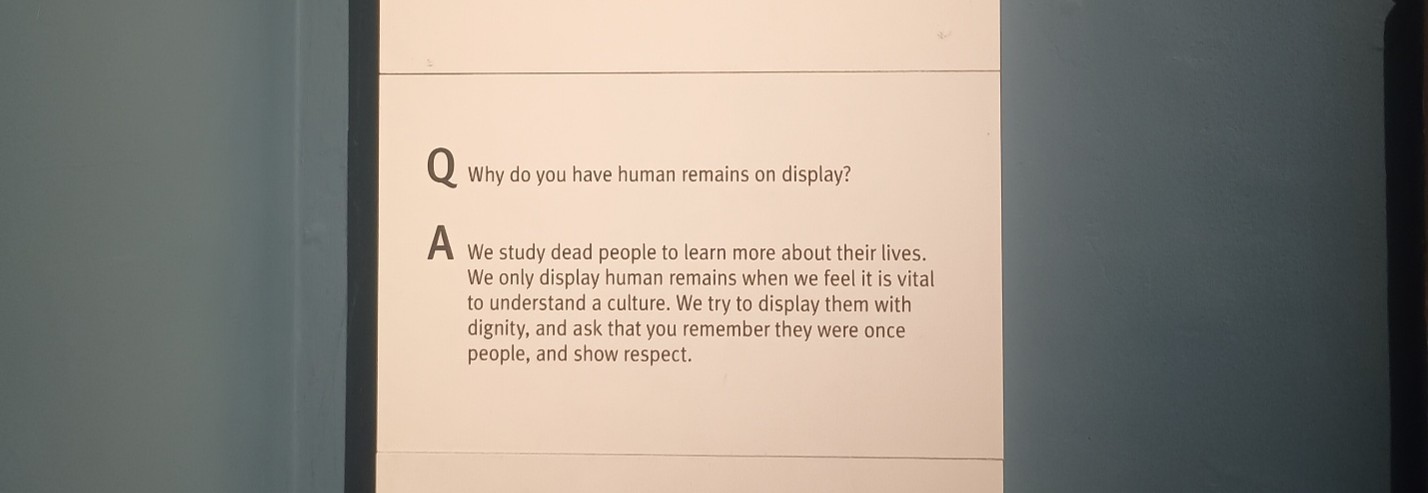
Sign at the Kelvingrove Art Gallery and Museum explaining that human remains are only displayed when necessary. © Anke Hellebuyck.
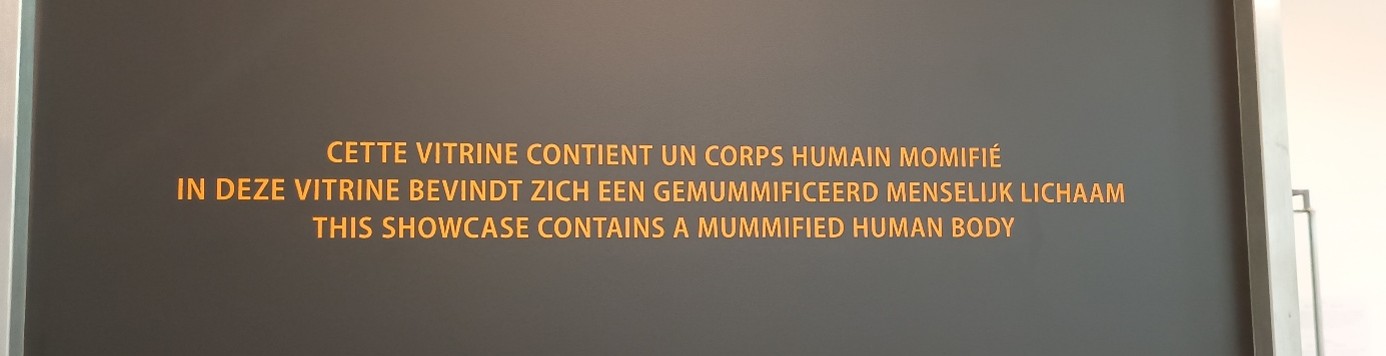
Disclaimer by the Royal Museum of Art and History, Brussels, warning that the showcase contains human remains. © Anke Hellebuyck.
Looking at human remains. Exploring sector needs for policy frameworks and ethical guidance on the display of human remains in museums in Flanders and Brussels
Human remains are part of museum collections all over the world and have been for several centuries. As human remains are being “rehumanized”, their display is increasingly criticized. This research aimed to map the perspectives of the Flemish and Brussels museum on the display of human remains, the challenges they encountered and to gain insight into their needs for guidance concerning the display of human remains.
Internationally, the display of human remains is critically reassessed. In Belgium, the rethinking of human remains on display is still in an early phase. This research aims to map the views of Flemish and Brussels museums on the display of human remains and to explore their needs for guidance and regulation.
First, the instruments that are available to the Flemish and Brussels museums to regulate the display of human remains were mapped. Second, interviews were conducted with museum professionals to gain insight into which of these instruments are used, how the museums currently handle the display, what challenges they encounter, and what instruments they need to help them to handle this complex issue.
The study found that the Flemish and Brussels museums were against government regulation of the display of human remains, as policy is too rigid to capture the nuances of the issue. The museums preferred ethical guidelines that advised on what human remains are, if they can be displayed, how to handle differentiation between types of remains, respectful display, posthumous harm, and the tensions within public opinion. These guidelines should be non-binding and flexible and informed by more research. To account for differing perspectives, the guidelines need to be the result of a participatory and collaborative approach. Finally, it needs to be clear whether they protect the visitor, the individual whose remains are on display, or both. Through consideration of these challenges, the guidelines can address the uncertainty felt by the museums concerning the display of human remains.