
Water and Asceticism: Changing Perceptions of Water Heritage on the St. Michaels Line
Olivier Dochez
Master Erfgoedstudies
2025 — 2026
onderzoek
promotoren
Yonca Erkan
Moniek Driesse
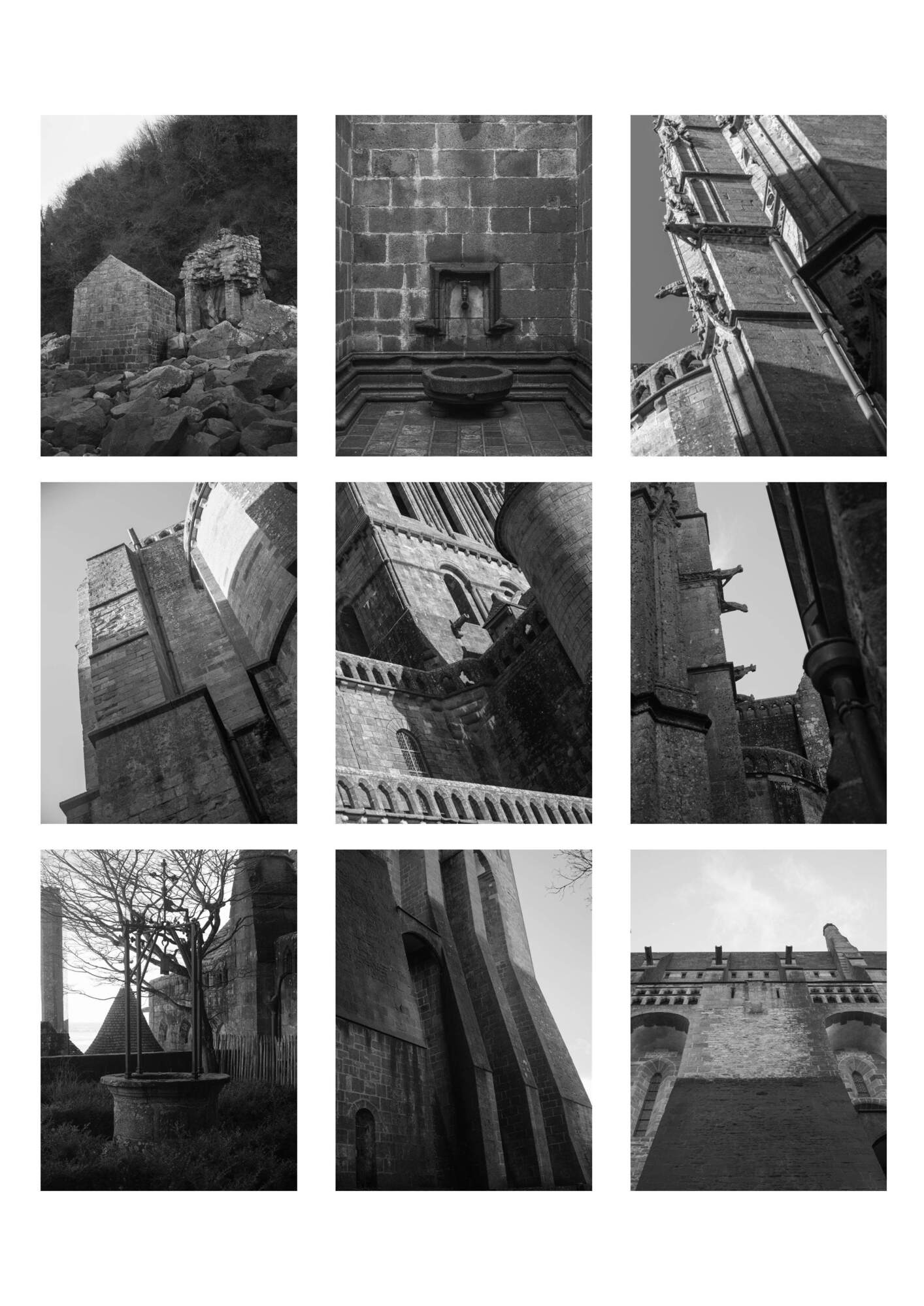
Hydraulic system within the abbey enclosure of Mont-Saint-Michel, from gutters, gargoyles, drainage pipes and canals to cisterns and other water reservoirs.
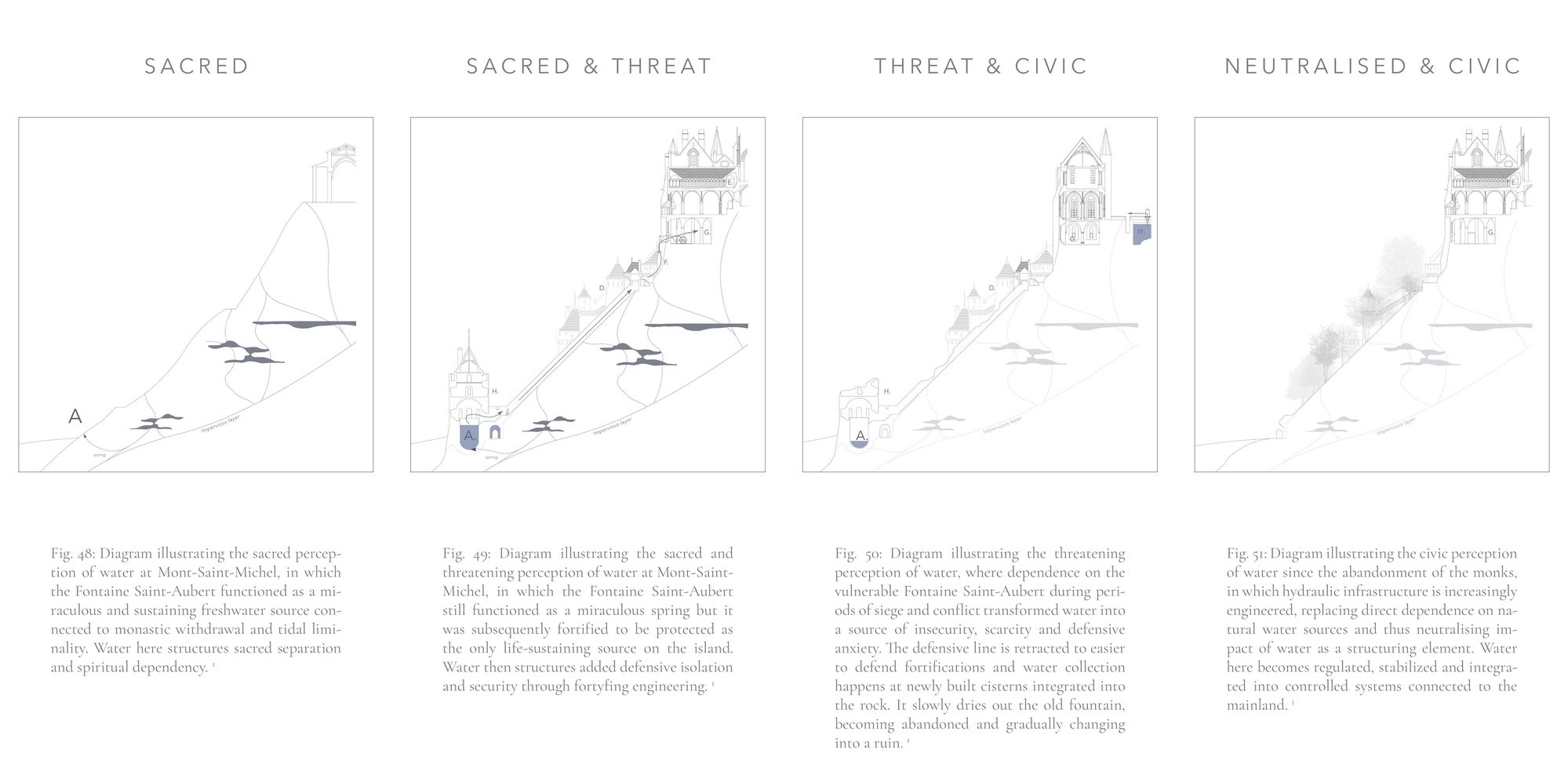
Diagrams showing changing perceptions of water heritage at Fontaine Saint Aubert, Mont-Saint-Michel.
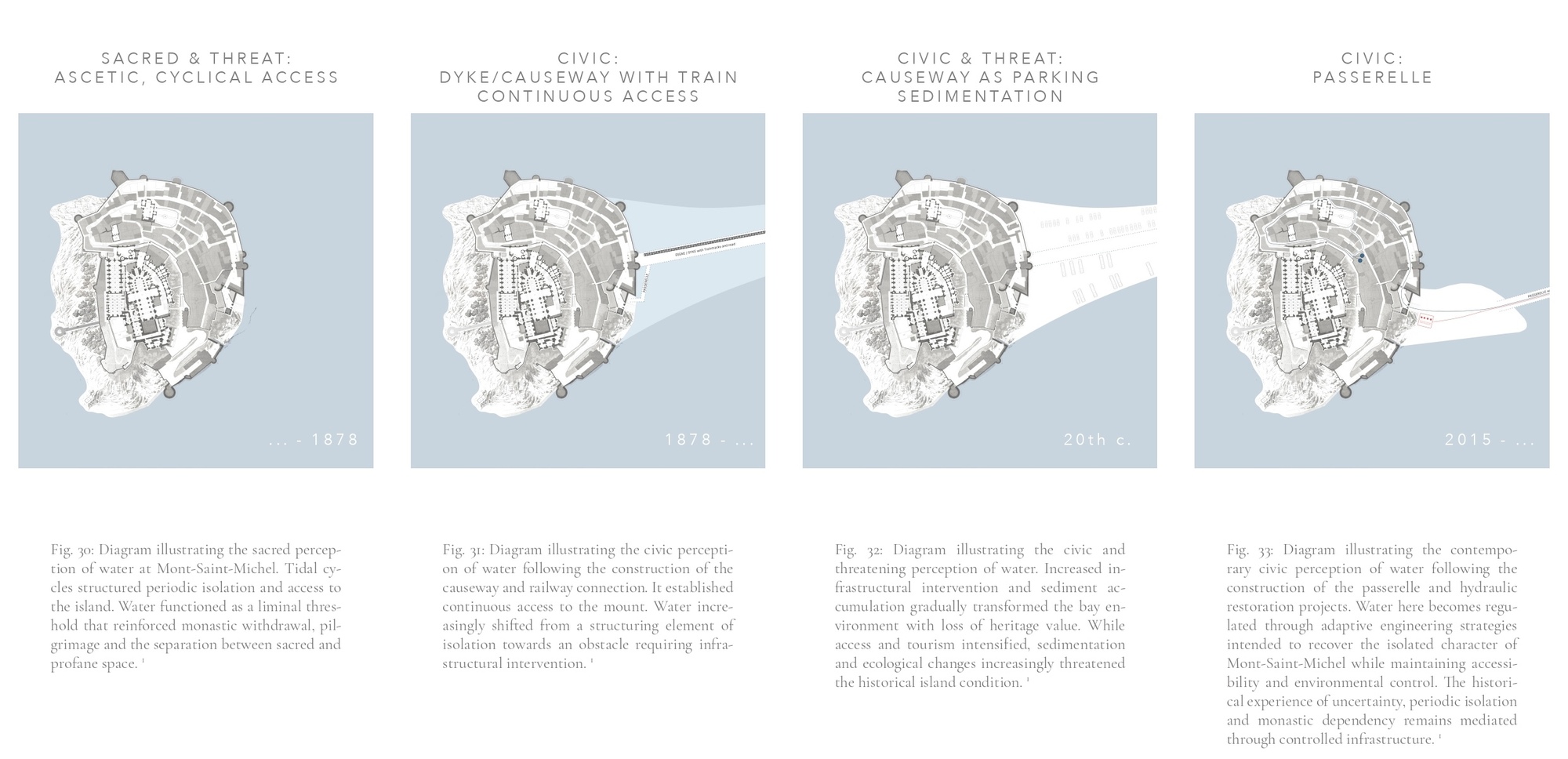
Diagrams showing changing perceptions of tidal accessibility at Mont-Saint-Michel.
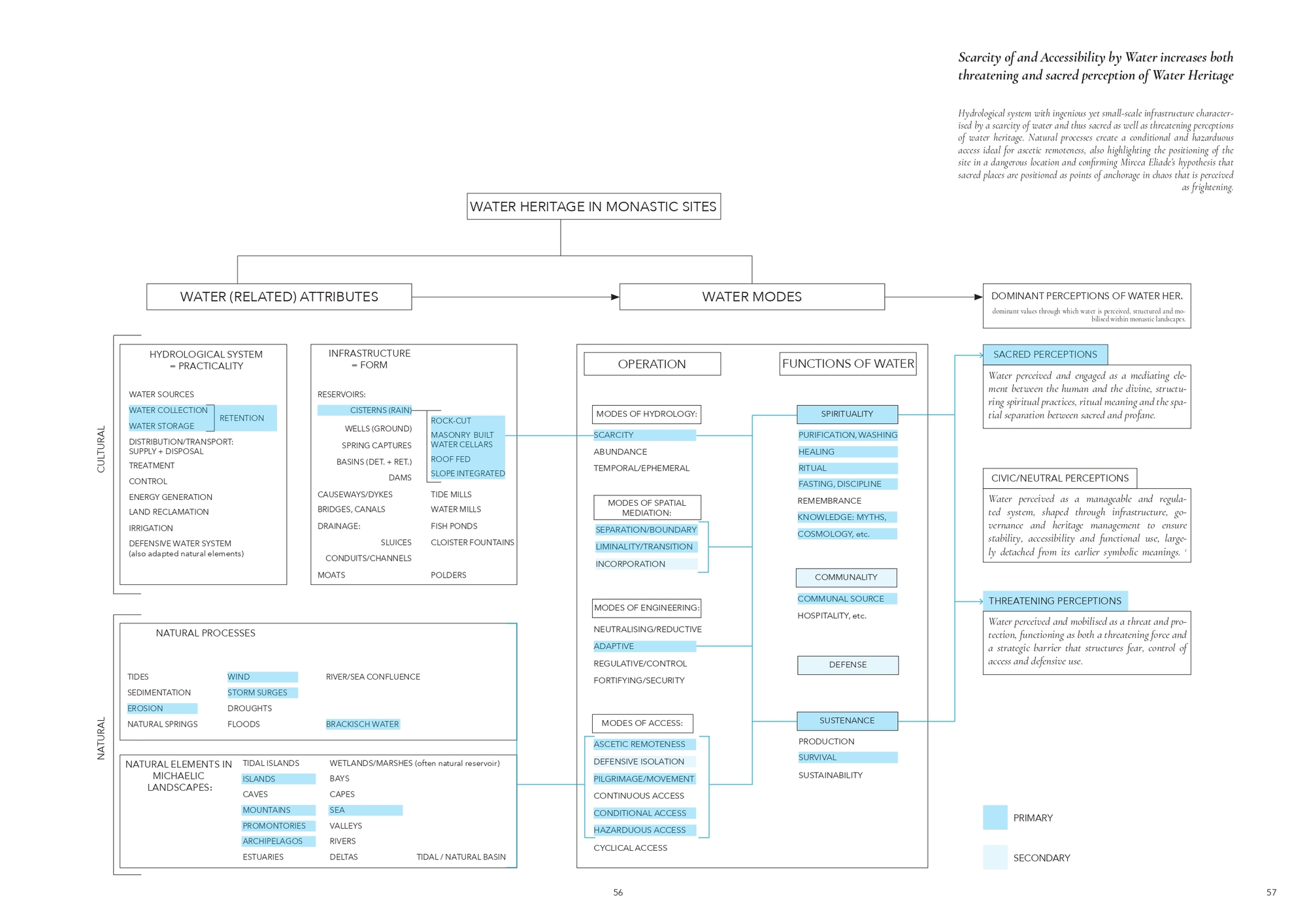
Example of a narrative on the analytical framework: Skellig Michael, where water scarcity and hazarduous accessibility increase both sacred and threatening perceptions of Water Heritage.
Water and Asceticism: Changing Perceptions of Water Heritage on the St. Michaels Line
The thesis investigates Water Heritage in Monastic sites. It presents a comparative analytical framework for understanding the relationships of water within a certain group of sanctuaries peculiarly lying on a spiritual ley line dedicated to the archangel Saint Michael. Characterised by dramatic and remote landscapes, the sites reveal recurring patterns and relationships relating to water, offering fresh perspectives on heritage management as well as highlighting forgotten heritage.
Monastic communities and ascetics often established themselves in landscapes shaped by water. Inspired by the Desert Fathers, early Christian hermits and ascetics went out to the desert to live a life of prayer and stillness. Typical landscapes such as deserts, tidal islands, coastal promontories, mountain river valleys and wetlands became settings for their withdrawal and monastic seclusion. Water supplied life. It structured daily routines and economic activity, but it is also associated with purification, protection and divine presence. Despite its significance within monastic life, water heritage in monastic sites has received comparatively little attention within either heritage studies or monastic landscape research.
To adress this gap, the thesis develops a framework for the comparative analysis of water heritage in monastic sites and applies it to a selection of Michaelic sites: Skellig Michael, St. Michaels Mount, Sacra di San Michele and Mont-Saint-Michel emerging as the principal case study. It investigates how water functioned not merely as a sustaining resource, but as a cultural, spiritual and spatial mediator in correspondence with other landscape characteristics such as remoteness, verticality and restricted accessibility. A narrative of a palimpsest in this way emerged, showing layers of changing meanings and perceptions that water possessed throughout the Michaelic sites’ history.